quarta-feira, 11 de dezembro de 2024

Letter showing Pope Pius XII had detailed information from German Jesuit about Nazi crimes revealed


ROME (AP) — Newly discovered correspondence suggests that World War II-era Pope Pius XII had detailed information from a trusted German Jesuit that up to 6,000 Jews and Poles were being gassed each day in German-occupied Poland. The documentation undercuts the Holy See’s argument that it couldn’t verify diplomatic reports of Nazi atrocities to denounce them.

The documentation from the Vatican archives, published this weekend in Italian daily Corriere della Sera, is likely to further fuel the debate about Pius’ legacy and his now-stalled beatification campaign. Historians have long been divided about Pius’ record, with supporters insisting he used quiet diplomacy to save Jewish lives while critics say he remained silent as the Holocaust raged.

Corriere is reproducing a letter dated Dec. 14, 1942 from the German Jesuit priest to Pius’ secretary which is contained in an upcoming book about the newly opened files of Pius’ pontificate by Giovanni Coco, a researcher and archivist in the Vatican’s Apostolic Archives.

Coco told Corriere that the letter was significant because it represented detailed correspondence about the Nazi extermination of Jews, including in ovens, from an informed church source in Germany who was part of the Catholic anti-Hitler resistance that was able to get otherwise secret information to the Vatican.

(Continue)

terça-feira, 10 de dezembro de 2024

Cousin marriages in the UK: what are the genetic risks?


Marriage between relatives such as first cousins increases the risk in children not of general birth defects and genetic problems of all kinds but of what geneticists call 'recessive' conditions: those caused by inheriting two copies of a gene each of which carries a mutation. It seems we may each...

Marriage between relatives such as first cousins increases the risk in children not of general birth defects and genetic problems of all kinds but of what geneticists call 'recessive' conditions: those caused by inheriting two copies of a gene each of which carries a mutation

It seems we may each carry about 12 mutations associated with recessive conditions. There are about 3.5 thousand recessive conditions, most of them very rare, so the chance of both partners carrying a mutation in the same gene is low. If both parents carry the same recessive mutation they then have a one in four risk of an affected child each time they conceive a child. In the UK, most children with recessive conditions are born to unrelated parents.

In children of unrelated couples, the risk of congenital and genetic including recessive problems is usually estimated at about 2-3 per cent. First cousins have a higher risk of recessive problems in children than unrelated couples because they share 12.5 per cent of their genetic material and may have inherited the same mutation from a common ancestor. Risk to their children is usually estimated at about double the risk of congenital and genetic problems in children of unrelated couples. At about 4-6 per cent, this doubled risk is also a 94-96 per cent chance that their child will be perfectly healthy. A cousin couple is thus more likely to have a healthy child than to have a child with a recessive problem.

Risk for recessive conditions also varies between communities depending on the distribution of recessive mutations, making some conditions more common than others, and on the history of marriages to blood relations within them. In the UK, cousin marriage is no longer common in the majority population but is practised within quite diverse minority groups, particularly those of relatively recent migrants from the Middle East and South Asia. Debate has focused on British Pakistanis, the largest population practising cousin marriage, because of the comparatively high incidence of a range of serious recessive problems.

In some British Pakistani families, marriage within the family or extended kinship group has been practised for generations and first cousin couples can trace numerous additional blood ties in their family history. They may therefore share more than 12.5 per cent of their genetic material and have a higher risk for recessive problems in their children than if they were first cousins without any additional connections by blood. This is the most likely explanation for the observation that, in some sections of the British Pakistani population, the risk of death or serious disability in children may be as high as 10 per cent.

Marrying an unrelated person does not remove this risk because of the general population risk of two people carrying a mutation in the same gene, particularly for the more common recessive conditions, but it can significantly reduce risk for rare recessives. In managing recessive risk for individuals or couples, the critical thing is not so much whether or not they are blood relatives but whether or not they are carriers of a mutation for the same condition. Premarital or pre-conception genetic counselling can be useful to establish a couple's risk and reproductive options before they start a family, particularly where one or both partners have an affected relative or if one partner has a recessive conditions themselves.

In the UK today, it would be as inappropriate to castigate cousin marriages on grounds of elevated recessive risk as it would be to stigmatise late childbearing on grounds of elevated risk of chromosomal abnormalities. Down syndrome risk is now managed through generic prenatal screening and counselling. Recessive risk presents rather different challenges because it includes risk for many different, mostly rare, conditions, some of them treatable. Carrier and prenatal tests are now possible for an increasing number of recessive conditions but screening for them all it not currently possible or realistic. It is often only after the birth of an affected child that clinicians know which condition is relevant within any particular family.

Recessive risk need to be managed by improving awareness of it, including the elevated risk associated with marrying relatives such as first cousins where there is a history of marriage within the family, and by ensuring appropriate genetic counselling. Public health and genetic counselling provisions should strive to enable individuals and couples to make informed marital and reproductive decisions, wherever possible. Any couple worried about genetic risk to children should ask their GP for a referral to a genetics clinic. Some scientists think that in the next decade or so we may all have access to our own personal


“The Hamas slogan is treated no differently under criminal law than the Hitler salute" (Gates of Vienna)


by Frederik Schindler
November 29, 2024

The first two court decisions that classify the slogan “From the river to the sea” as a symbol of the Hamas terrorists are legally binding. The judiciary in Bavaria declares that their “clear position” on this issue is having an effect. The criminal liability of the slogan is controversial.

It is the most well-known slogan, one that has been used for decades by anti-Israel activists. “From the river to the sea, Palestine will be free.” In this slogan there is no more room for the state of Israel, which, in addition to the West Bank and the Gaza Strip, extends over 78% of the territory between Jordan and the Mediterranean. Now the first two court decisions are legally in force, in which the use of the slogan is punishable.

This concerns two criminal rulings from district courts in Sonthofen and Fuerstenfeldbruck. Both have been made available to Welt am Sonntag. It regards postings on the X platform from November of last year. A few weeks after the terror attacks by Hamas on Israel, an X user used this slogan on November 3. Ten days later, another posted: “No, never recognition of a genocidal state like Israel. From the river to the sea, no Israel territory!”

The State Prosecutor’s offices in Kempten and Munich see this as the use of symbols of anti-Constitution and terrorist organizations, punishable under Paragraph 86a of the Criminal Code — and applied to the district court to issue an order of punishment (sentence). In the first case, it was €4,200 to be paid — €60 a day for 70 days. In the second case, it was €5,400 euros, equivalent to €60 a day for 90 days. Since no objection was filed, these became legally binding in mid-July and the beginning of October. Otherwise, the penalty order would have been in an indictment in a principal court hearing.

“They knew, or at least accepted, that it was the expression of a Hamas slogan,” the District Court of Sonthofen found in its decision in the penalty order. In Fuerstenfeldbruck, the document reads: “The expression symbolizes in a catchy phrase the proclaimed goal in the Hamas Charter that Israel should be fully incorporated into a Palestinian state. This goal logically assumes the destruction of the state of Israel.”

The Commissioner for Anti-Semitism in the Bavarian judiciary, senior public prosecutor Andreas Franck, assesses the sentences positively: “Our clear position on this issue is showing an effect. There have hardly been any cases in public space in Bavaria where the Hamas slogan has been reported.”

Criminal penalty for the slogan is controversial

On November 2, 2023, the Federal Interior Ministry banned Hamas. A portion of the decree is the ban on using their symbols publicly. The slogan “From the river to the sea” is also named. Since 2017 it has stood in the charter of the Islamist terror organization, where it states: “Hamas rejects any alternative to the complete and unrestricted liberation of Palestine from the river to the sea.” However, it was already used by the Palestine Liberation Organization (PLO) in the 1960s, so it is clearly older than the 1987-founded Hamas. On the contrary, the 1977 election platform of the current Premier, Benjamin Netanyahu, states: “Between the (Mediterranean) sea and the Jordan (river), there will only be Israeli sovereignty.”

The criminal liability of the slogan is controversial. Some activists point out its ambiguity and stress that they are demanding not the eradication of Israel or Jewish life, rather the “liberation of Palestine from Israeli occupation”— or a secular and democratic state, in which Jews and Palestinians could live equally. Other courts have interpreted the expression as covered under freedom of expression.

In March of this year, the Hessian Administrative Court threw out the demonstration requirements of the city of Frankfurt, with which it wanted to ban the slogan. The court stated that criminal liability was “extremely doubtful”. The main principle says nothing about how the goal of “a free Palestine, including the territory of Israel,” should be reached— for example, either through armed struggle or treaties under international law. There are no visible concrete indications that the use of the slogan must be understood as a mandatory call to violence and terror. The Bavarian Administrative Court decided in June that the city of Munich could not ban the slogan from demonstrations across the board if there was no “recognizable reference to Hamas”.

(Continue)


Nomes mais comuns em Portugal em 2023

Masculinos

No top 10 dos nomes masculinos em Portugal em 2023, o nome "Francisco" ocupa o primeiro lugar com 1367 registos. Francisco é um nome tradicional e bastante comum em Portugal. Em segundo lugar, temos o nome "Afonso" com 1171 registos, seguido de "Duarte" com 1129 registos. Estes nomes masculinos têm uma sonoridade forte e são associados à história e cultura portuguesa. Outros nomes masculinos populares incluem "Lourenço" (1118 registos), "Tomás" (1061 registos), "João" (1006 registos), "Vicente" (949 registos), "Gabriel" (904 registos), "Miguel" (904 registos) e "Martim" (902 registos).

Femininos

No top 10 dos nomes femininos em Portugal em 2023, o nome "Maria" lidera a lista com 4675 registos. Maria é um nome clássico e tradicional, com uma forte ligação à cultura e tradição portuguesa. Em segundo lugar, temos o nome "Alice" com 1111 registos, seguido de "Leonor" com 1090 registos. Estes nomes têm ganhado popularidade devido à sua sonoridade suave e elegante. Outros nomes femininos populares incluem "Matilde" (1011 registos), "Benedita" (1002 registos), "Carolina" (836 registos), "Beatriz" (670 registos), "Francisca" (654 registos), "Camila" (616 registos) e "Margarida" (600 registos). 

Nomes mais incomuns em Portugal


Se no top da lista de nomes escolhidos para os bebés estão nomes mais tradicionais, há também quem goste de nomes mais “arrojados” dos quais, muitas vezes, nunca ouvimos falar. Alguns exemplos são: Liv, Pia, Penka, Melania, Scarlett, Kimberly, Yohanna, Noa, Lua, Rosamar, Mariamar, Águeda, Afonsa, Sibila, Deusa e Felicidade. Na tabela das aprovações de nomes masculinos sobressaem, entre outros, Hur, Summer, Iker, Bruce, Justice, Umar, Efraim, Zidane, Dylan, Kévim, Tristão, Joseberto, Nemésio, Amândio, Messias, Príncipe, Ken e Ronaldo, Prashanna, Cédric, ou Horus.

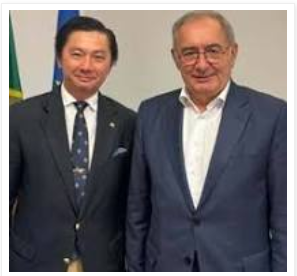
Outras caracteríticas do jovem Vitório, secretário do secretário de Estado das Comunidades

As ideias do putativo nomeado eram conhecidas. Estão, aliás, na blogosfera. Exemplos? Para Vitório, Aristides Sousa Mendes, o cônsul que “alegadamente ajudou a salvar vidas judias durante a II Guerra Mundial, pôs em risco a vida de todos os portugueses”. O 25 de Abril de 1974 foi, “em Macau, um dia de luto, pois significou a derrota de Civilização pelo Comunismo”. Vitório chegara mesmo a indignar-se com a detenção de elementos de organizações fascistas e neonazis em Portugal, em 2007, para ele “reflexo da formatação cultural dada pelo ensino de esquerda”. O português nascido em Macau acredita na trilogia “Deus, Pátria e Família”, sente-se repugnado pelos “valores libertinos e perversos da revolução francesa e de laivos marxistas”. Era frequente lê-lo a terçar armas contra o “Terrorismo Anarco-Piolhoso e Extrema-Esquerdista com cobertura Socialista” e os “capitães abrilinos”. “Conservador-reformista e tradicionalista”, acredita que, no PSD, as novas gerações irão “limpar o Partido e por Deus, por Portugal e pelo Povo e Famílias Portuguesas”, rezando e governando “a bem da Nação”. Um dia, Daniel Oliveira, no Blasfémias, deu-lhe troco: “Julguei que estava a ver a RTP Memória mas ainda antes de haver RTP. Você toma banho em formol?”, questionou.

Vitório fechou, entretanto, o seu blogue Portas do Cerco e atribuiu alguns comentários a um “clone” com intenção de denegrir e difamar. Poucos acreditaram. No livro Crónicas Portuguesas, editado em 2009 em Coruche, Vitório elogiara, de resto, o fascismo espanhol de Franco e considerara a instauração da ditadura militar em Portugal o momento em que o País “pôde encontrar estabilidade e sobretudo paz em tempo de guerras generalizadas”. Sobre a PIDE, é taxativo: “Teve um papel fundamental para combater os atos subversivos da oposição política”, em defesa da “unidade, liberdade e soberania nacionais”. O mal estava feito. Dito e escrito.

“O Vitório é simpático e prestável, mas é um fura-bolos, incapaz de vender um salpicão. A uns dá-lhes para Napoleão, a outros para a extrema-direita”, ironiza José Rocha Dinis, diretor do Tribuna, que confirma ter sofrido pressões para mudar a opinião sobre a eventual nomeação de Vitório e abordado o caso com o secretário de Estado das Comunidades.

Afinal, quem se teria lembrado de Vitório para um cargo onde os representantes de vários países têm estatuto de embaixadores? Segundo Nuno Lima Bastos, ex-dirigente do PSD/Macau, “a ideia só pode ter partido do José Cesário, que sempre gostou de ter pajens à volta”. Reduzir os objetivos do PSD/Macau “aos interesses particulares do deputado José Cesário é pouco, muito pouco”, indignara-se, já em 2011, nas páginas do Hoje Macau, o social-democrata politólogo Arnaldo Gonçalves. Desde que tomou posse, o secretário de Estado já se deslocou cinco vezes a Macau, contando com a última, esta semana, para o 10 de junho. Segundo as fontes da VISÃO em Macau, Cesário terá sido confrontado por responsáveis da imprensa portuguesa com o escândalo da possível escolha de Vitório para o Fórum Macau. “É apenas uma hipótese”, terá admitido, sob pressão, atribuindo as investidas a Rita Santos, “que pede muito”. A própria não respondeu aos emails da VISÃO. Cesário desmente interferências no processo.

Epílogo: o nome de Vitório cairia. O MNE, então ainda liderado por Portas, lavou as suas mãos. Vítor Sereno, diplomata de carreira, cônsul-geral de Macau e ex-chefe de gabinete de Miguel Relvas, ocupa hoje o lugar que, por semanas, “foi” de Vitório. A notícia da LUSA, essa, nunca foi desmentida.

Vitório recebeu um extenso questionário da VISÃO destinado a esclarecer matérias constantes deste artigo, entre as quais algumas ligadas ao percurso profissional extra CPLP e a eventuais diligências relacionadas com negócios destinados à atribuição de vistos dourados a chineses. “Não alimento a curiosidade jornalística nem especulações sobre a minha pessoa ou atividades”, reagiu, ao telemóvel. “Sou um orgulhoso cidadão português nascido em Macau e em tudo o que faço defendo a minha Pátria”.

(segunda-feira, 9 de dezembro de 2024) MNE: José Cesário nomeia secretário que elogia Franco e Salazar, a PIDE e o Chega mas desta vez não o condecorou


O novo secretário pessoal do secretário de Estado das Comunidades Portuguesas andou em manifestações do Chega, aprecia ditadores e a PIDE, critica o que o cônsul Aristides de Sousa Mendes fez, ao salvar milhares de judeus, durante a II Guerra Mundial, fazia facilitação de negócios entre Portugal e China e classifica o 25 de Abril de 1974 como "um dia de luto".

No dia 4 de julho foi publicado em Diário da República a nomeação de Vitório Rosário Cardoso como secretário pessoal do secretário de Estado das Comunidades Portuguesas, em despacho assinado por este a 24 de maio. Vitório Cardoso, indica o seu currículo, tem a “frequência do curso de Turismo, na Universidade de Macau, e do curso avançado de Estudos Marítimos, no Instituto de Ciências Políticas da Universidade Católica Portuguesa”, ambos por concluir. (Revista Sábado)
 
Revista Visão

Ainda não conhece o Vitório? A VISÃO conta-lhe tudo

As ideias do putativo nomeado eram conhecidas. Estão, aliás, na blogosfera. Exemplos? Para Vitório, Aristides Sousa Mendes, o cônsul que “alegadamente ajudou a salvar vidas judias durante a II Guerra Mundial, pôs em risco a vida de todos os portugueses”. O 25 de Abril de 1974 foi, “em Macau, um dia de luto, pois significou a derrota de Civilização pelo Comunismo”. Vitório chegara mesmo a indignar-se com a detenção de elementos de organizações fascistas e neonazis em Portugal, em 2007, para ele “reflexo da formatação cultural dada pelo ensino de esquerda”. O português nascido em Macau acredita na trilogia “Deus, Pátria e Família”, sente-se repugnado pelos “valores libertinos e perversos da revolução francesa e de laivos marxistas”. 
Era frequente lê-lo a terçar armas contra o “Terrorismo Anarco-Piolhoso e Extrema-Esquerdista com cobertura Socialista” e os “capitães abrilinos”. “Conservador-reformista e tradicionalista”, acredita que, no PSD, as novas gerações irão “limpar o Partido e por Deus, por Portugal e pelo Povo e Famílias Portuguesas”, rezando e governando “a bem da Nação”. Um dia, Daniel Oliveira, no Blasfémias, deu-lhe troco: “Julguei que estava a ver a RTP Memória mas ainda antes de haver RTP. Você toma banho em formol?”, questionou.
 
O regresso do “nosso” Vitório-I (Jornal Tribuna de Macau)

Às 3.15 da tarde de 1 de Agosto de 2010 (hora de Portugal, pensa-se), Vitório Rosário Cardoso escreveu um “post”: “solicito que sejam apagados todos os comentários assinados com o nome “vitório rosário cardoso” uma vez que foram publicados por um “clone”, que tem como intenção de denegrir e difamar”. O técnico de comunicação da CPLP referia-se a comentários seus surgidos no blogue “Portas do Cerco” – www.passaleao.blogspot.com. O autor adiantava que “Este caso já está a ser seguido pelas autoridades policiais competentes”, mas até hoje não se conhecem resultados.

Notícias Viriato, blogue de extrema-direita:

Entrevista a Vitório Cardoso: “O Maior Valor de Portugal e da Portugalidade é o Universalismo.”

O Notícias Viriato entrevistou o Presidente da Secção do PPD/PSD em Macau e Hong Kong, Vitório Rosário Cardoso, no início de Abril de 2020. Entre vários tópicos, falou sobre a sua história familiar, a sua vida profissional, as relações entre Portugal e a China, e o papel de Macau.

Chega junta algumas centenas de pessoas em Lisboa para mostrar que “Portugal não é racista”

Ventura encabeçou o desfile e teve ao seu lado a actriz Maria Vieira assim como o líder da corrente interna centrista CDSXXI, Pedro Borges de Lemos, com a bandeira do CDS. Muito perto, seguia o presidente da secção do PSD em Macau e Hong Kong, Vitório Cardoso, que, tal como na manifestação do Chega de 27 de Junho, levava ao ombro uma bandeira do PSD.

Jornal Ponto Fnal

Woke no seu melhor (ou pior...)