domingo, 15 de dezembro de 2024

Outcry after RFK Jr linked to effort to nix US approval for polio vaccine


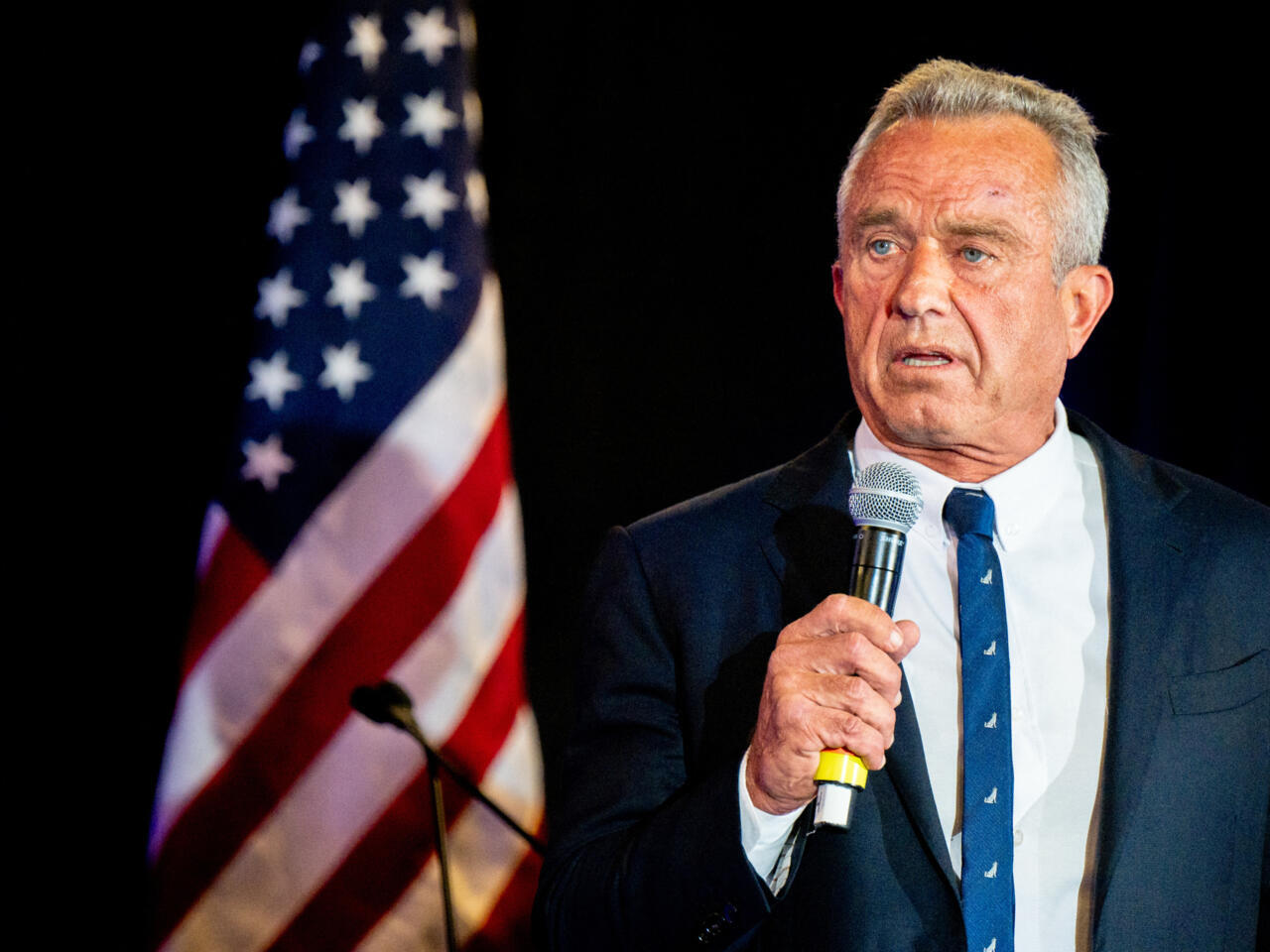
Robert F Kennedy Jr, a vaccine sceptic, has sought to distance himself from his lawyer’s polio vaccine petition.

Backlash has been building in the United States following a news report that links one of President-elect Donald Trump’s proposed cabinet members to an effort to revoke approval for the polio vaccine.

On Saturday, The Associated Press news agency published a statement from a spokesperson for Robert F Kennedy Jr, whom Trump has nominated to lead the Health and Human Services Department.

In the statement, Kennedy’s camp attempted to distance the nominee from a New York Times report that his lawyer Aaron Siri had petitioned to suspend approval for the life-saving vaccine.

“Mr Kennedy believes the Polio Vaccine should be available to the public and thoroughly and properly studied,” Katie Miller, Kennedy’s spokesperson, said.


But The New York Times article has raised alarm about Kennedy’s nomination to Health and Human Services, a department whose mission is to enhance the “health and well-being of all Americans”.

Kennedy, like Siri, is a vocal vaccine sceptic. In 2020, at the height of the COVID-19 pandemic, Kennedy helped spread doubts about vaccines designed to protect against the deadly virus, calling them “shoddily tested” and potentially “deadly”.

And in 2019, when a measles outbreak killed more than 80 children in Samoa, Kennedy wrote to the Samoan prime minister implying that a “defective vaccine” could be to blame. He has also pushed conspiracy theories that link vaccination to autism, a widely debunked belief.

Kennedy has long denied being anti-vaccine, arguing instead that he simply wants to ensure vaccine safety. But members of his own family have spoken out against his track record of spreading vaccine misinformation.

A Trump ally

In the 2024 presidential race, Kennedy ran on an independent ticket, before suspending his campaign in August and throwing his support behind Trump.

Afterwards, he became a prominent Trump surrogate, appearing numerous times on the campaign trail with the Republican leader.

Trump, in turn, teased early on that he would nominate Kennedy to his administration.

“I’m going to let him go wild on health,” Trump said at an October campaign stop at Madison Square Garden in New York. “I’m going to let him go wild on the medicines.”


Trump’s decision to pick Kennedy to head Health and Human Services has raised concern in the medical community about the future of efforts to limit the spread of preventable illness.


Those concerns were amplified on Friday, with The New York Times report. The article resurfaced a 2022 petition Siri made to the Food and Drug Administration to rescind the polio vaccine’s approval, along with that of other vaccines.

Polio is a highly infectious disease, capable of causing paralysis and death. There is no cure once infected, but vaccines can prevent its spread.

Siri has enjoyed a close relationship with Kennedy. The two campaigned together during Kennedy’s bid for office, and NBC News reported that Kennedy mulled appointing Siri as his attorney general, had he succeeded in winning the White House.

Swift criticism

The backlash to Friday’s report was swift, with bipartisan condemnation pouring in.

Senate Minority Leader Mitch McConnell, a Republican, issued a statement on Friday warning that any effort to discredit the polio vaccine could threaten the nominee’s Senate confirmation hearing.

He did not mention Kennedy by name, but McConnell, 82, is known to be a survivor of childhood polio, which left his left leg briefly paralysed.


“Efforts to undermine public confidence in proven cures are not just uninformed — they’re dangerous,” McConnell wrote.

“Anyone seeking the Senate’s consent to serve in the incoming administration would do well to steer clear of even the appearance of association with such efforts.”

Democrats likewise criticised Kennedy’s association with Siri.

“Say goodbye to your smile and say hello to polio,” Senator Elizabeth Warren said in a video posted to social media. “This is a man who wants to stop kids from getting their polio and measles shots.”

Another senator, Chuck Schumer, called on Kennedy to make his position on the polio vaccine clear.

“It’s outrageous and dangerous for people in the Trump Transition to try and get rid of the polio vaccine that has virtually eradicated polio in America and saved millions of lives,” Schumer, the Senate majority leader, wrote. “RFK Jr. must state his position on this.”

Hillary Clinton, the 2016 Democratic nominee for the presidency and a longtime rival of Trump’s, posted her own rejoinder, with a screenshot of The New York Times article.

“I think Trump voters may be surprised to learn they voted to make polio great again,” she wrote, offering a riff on Trump’s slogan, “Make America Great Again”.

Aljazeera - 15 Dec 2024


Robert F Kennedy and Aaron Siri: two polititians that support Making Polio Great Again


Ever since Trump tapped bona fide conspiracy theorist and anti-vaxxer RFK Jr. to serve as secretary of the Department of Health and Human Services and pledged to let him “go wild” on public health, a palpable sense of dread has loomed large. And it’s only getting worse: On Friday, the New York Times reported that Kennedy’s even more aggressively anti-vaxx lawyer, Aaron Siri — a man who has petitioned the FDA to revoke its approval of the polio vaccine — is apparently helping him pick out federal health officials for the incoming administration.

Kennedy has “privately expressed interest” in making Siri general counsel of the Department of Health and Human Services. “I love Aaron Siri,” Kennedy said in a November podcast episode hosted by Del Bigtree, ICAN’s founder and the former communications director for Kennedy’s presidential campaign. “There’s nobody who’s been a greater asset to the medical-freedom movement than him."

In 2022, Siri filed a petition targeting the polio vaccine on behalf of the Informed Consent Action Network, or ICAN, a nonprofit that bills itself as a proponent of “medical freedom.” In his petition, Siri argued that the FDA has not conducted sufficient safety studies on the vaccine, which has protected Americans from a virus that can cause lifelong paralysis, since a nationwide immunization campaign in the 1950s. Siri has also filed to revoke FDA approval of the hepatitis B vaccine and has petitioned to “pause distribution” of 13 other critical inoculations, including those that protect against tetanus, diphtheria, and hepatitis A

Donald Trump has picked vaccine sceptic and former independent presidential candidate Robert F Kennedy Jr, commonly known by his initials RFK Jr, has a history of spreading health information that scientists say is false. If his nomination is ratified by the Senate, he will lead a huge agency overseeing everything from food safety to medical research and welfare programmes. The executive director of the American Public Health Association (APHA) said the organisation will "absolutely oppose" Kennedy's nomination.


RFK Jr.’s Lawyer Has Already Been Targeting Vaccines


Ever since Trump tapped bona fide conspiracy theorist and anti-vaxxer RFK Jr. to serve as secretary of the Department of Health and Human Services and pledged to let him “go wild” on public health, a palpable sense of dread has loomed large. And it’s only getting worse: On Friday, the New York Times reported that Kennedy’s even more aggressively anti-vaxx lawyer, Aaron Siri — a man who has petitioned the FDA to revoke its approval of the polio vaccine — is apparently helping him pick out federal health officials for the incoming administration.

Who is Siri anyway, besides a man making FDR turn in his grave? A close adviser to Kennedy who represented him during his presidential campaign, Siri is a partner at the New York–based law firm Siri & Glimstad, where he oversees roughly 40 professionals working on vaccine policy and regularly rails against “industry misconduct and government overreach.” His résumé includes helping clients skirt vaccination requirements and convincing a California judge to rule against a COVID-vaccine mandate in San Diego public schools.

In 2022, Siri filed a petition targeting the polio vaccine on behalf of the Informed Consent Action Network, or ICAN, a nonprofit that bills itself as a proponent of “medical freedom.” In his petition, Siri argued that the FDA has not conducted sufficient safety studies on the vaccine, which has protected Americans from a virus that can cause lifelong paralysis, since a nationwide immunization campaign in the 1950s. Siri has also filed to revoke FDA approval of the hepatitis B vaccine and has petitioned to “pause distribution” of 13 other critical inoculations, including those that protect against tetanus, diphtheria, and hepatitis A, demanding that their manufacturers disclose details about the risks of the ingredient aluminum, which researchers have linked to a tiny uptick in asthma. (Never mind the potentially fatal risk of, say, actually contracting diphtheria.)

Though Kennedy and Siri have independently stated that they don’t plan to strip away vaccine access (“You want to get the vaccine — it’s America, a free country,” Siri testified before the Arizona state legislature last spring), the Times reports that Siri has joined him at the Trump transition headquarters in Florida, where the duo have asked the candidates they’re interviewing for major health-policy positions about their views on vaccines. The Times also reports that Kennedy has “privately expressed interest” in making Siri general counsel of the Department of Health and Human Services. “I love Aaron Siri,” Kennedy said in a November podcast episode hosted by Del Bigtree, ICAN’s founder and the former communications director for Kennedy’s presidential campaign. “There’s nobody who’s been a greater asset to the medical-freedom movement than him.”

If all this weren’t frightening enough, Trump, in his “Person of the Year” interview with Time magazine this week, promised to do “very serious testing” on vaccines and says he will eliminate those he thinks “are not beneficial.” What could possibly go wrong?

Donald Trump saw another cabinet pick face strong opposition


Seventy-seven Nobel prize winners on Monday sent an open letter to the US Senate opposing the nomination of Robert F. Kennedy Jr., President-elect Donald Trump's choice for Secretary of Health and Human Services (HHS), citing his "lack of credentials" and anti-vaccine beliefs (…) Kennedy is far from the only Trump cabinet nominee to stir controversy.

Among the most notable is Pete Hegseth, a Fox News anchor tapped to lead the Department of Defense, who has seen his nomination derailed with sexual assault allegations and rumors of excessive drinking.

And Trump's first pick for Attorney General, former US Congressman Matt Gaetz, withdrew after further scrutiny emerged of alleged sexual relations he had with a minor

after scores of Nobel prize laureates "strongly" urged the US Senate on Monday to deny Trump's pick for Secretary of Health and Human Services, former presidential hopeful Robert Kennedy Jr., deriding in an open letter Kennedy's "lack of credentials" and anti-vaccine views. 

PS: Let's make this photo viral!!
(Continue)

Mr. Trump, don't do this to other children!

Let's make this photo viral. It says everything that can be said about polio. Mr. Trump, don't make polio great again!


More than 75 Nobel laureates sign letter slamming Trump's choice of RFK Jr for US health secretary


Donald Trump saw another cabinet pick face strong opposition on Monday after scores of Nobel prize laureates "strongly" urged the US Senate on Monday to deny Trump's pick for Secretary of Health and Human Services, former presidential hopeful Robert Kennedy Jr., deriding in an open letter Kennedy's "lack of credentials" and anti-vaccine views.  

Seventy-seven Nobel prize winners on Monday sent an open letter to the US Senate opposing the nomination of Robert F. Kennedy Jr., President-elect Donald Trump's choice for Secretary of Health and Human Services (HHS), citing his "lack of credentials" and anti-vaccine beliefs.

"In view of his record, placing Mr. Kennedy in charge of DHHS would put the public's health in jeopardy," concludes the letter signed by 77 Nobel recipients in medicine, chemistry, physics and economics.

Among the signatories is Drew Weissman, who received the 2023 Nobel Prize in Medicine for his work on developing mRNA vaccines, which was a major breakthrough in the fight against Covid-19.

Kennedy, a nephew of assassinated US president John F. Kennedy Jr., made his own White House run earlier this year before throwing his support behind Trump.

In return, Trump has tapped him to oversee the part of the executive branch in charge of health and medicine -- though his selection must be approved by a majority of the US Senate, as outlined by the Constitution.

An environmental lawyer by trade with no medical background, Kennedy has spent years professing conspiracy theories linking vaccines and autism, and most recently spread misinformation about Covid-19 vaccines.

He has said if he is confirmed for the position he will work to remove fluoride from tap water in the US, despite its addition being considered a major victory against bacteria causing tooth decay.

"In addition to his lack of credentials or relevant experience in medicine, science, public health, or administration," the letter reads, "Mr. Kennedy has been an opponent of many health-protecting and life-saving vaccines, such as those that prevent measles and polio."
(Continue)

Africa is on track to be declared polio-free (2019)


It has been three years since the continent’s last reported case of the virus. THERE IS NO cure for polio. The virus, which is spread from person to person, attacks the brain and spinal cord, bending children’s limbs into horrific spider-like contortions. It has killed or crippled millions, rich and poor alike (President Franklin D. Roosevelt famously contracted the disease). Luckily, there is good news. Today marks three years since Nigeria, Africa’s most populous country, reported a case of the virus (The Economist - 2019)

(Continue)